Hey there! I hope everything is good and fine. So if you want to learn Machine learning you definitely should have heard of this.
But one of the many problems a beginner faces here is where exactly they should begin!!! Which thing do they need to learn about, before they even need to prepare to learn Machine Learning just like the way you would go preparing to prepare for a company and ready to join the team.
There should be no wasting months at all. Let us find out the answers to all such kinds of questions right here.
WHY LEARN MACHINE LEARNING IN 2026?
Know why this is going to be useful before taking a step. In 2026, machine learning will still be one of the most desired skills to have in the world. Companies in finance, healthcare, fashion and more need the ability to build, test and train machine learning models and algorithms.
The job market for those skills pays incredibly well, often more than traditional coding jobs even for entry-level ML professionals.
The artificial intelligence field is booming. AI is going to become integrated into almost every industry. The ones that “get” it will be able to implement cutting edge solutions. If you don’t have a fancy degree – don’t worry.
Most people learn the trade and get it from online courses and personal portfolios, similar to those of leading ML Engineers.
If you really boil it down, ML isn’t a quick hop, it is a path and all steps depend on preceding steps. So as to not have to struggle through this, just stick to the progression I have listed below:
Top Best THE MACHINE LEARNING ROADMAP FOR 2026
Here goes the path detailed in 5 clear steps:
Steps:
PHASE 1: MASTER PYTHON
Python is the king of machine learning – pretty much every tool, every library that comes out for machine learning, all that stuff works best in Python.
Also, it is quite possibly the simplest programming language that has ever existed, easiest one for a beginner to read. So you’re going to have to learn the basic syntaxes such as variables, and if/else conditions, if/while and for loops, and obviously how functions are used.
Lists, dictionaries, sets need to be learned, you also must know how to read/write into files etc.
And for practice you’d also want to try to come up with some very simple applications such as trying to write down a number guessing game or a simple to-do list manager.
If you take on with few hours a week you should master the basics of Python within three to six weeks so take your time because at some point down the road, lack of proper knowledge about python can bring a few real headaches.
PHASE 2: LEARN THE ESSENTIAL MATH (DON’T OVERDO IT)
90% of the courses tend to hide you, but the truth is that in order to learn machine learning, you don’t need a math degree, you just need to learn 3 basic topics.
- The most essential part of math is:
- Linear Algebra: You simply learn what matrices and vectors are and their basic operations (in the end, learning to do stuff with tables of numbers)
- Basic Probability: mean, median, standard deviation and basic odds.
- Calculus: what derivative and gradient mean.
YouTube channels such as 3Blue1Brown and platforms like Khan Academy can perfectly teach you these basic concepts in a very clear and visual way.
Focus on understanding the concepts, not on how to proof them. This stage is more dependent on math than Python, and it should be studied at the same time as Python for 4 to 8 weeks.
PHASE 3: FAMILIARIZE YOURSELF WITH THE DATA TOOLS
Data tasks account for 80% of machine learning, hence you need to be familiar with tools to perform such operations on Python. Dive into NumPy – the library for operating on numbers and arrays and Pandas to handle tabular data similar to Excel.
What comes with that, it’s worth learningMatplotlib and Seaborn – the libraries for plotting that will help visualize your data patterns.
Test you knowledge on real datasets obtained on the internet.
Find Sport data, house sale prices or anything that you are into, but then prepare yourself to dirty your hands cleaning, transforming it, analyzing, and plotting some nice charts.
PHASE 4: EXPLORE THE BASIC MACHINE LEARNING ALGORITHMS
It’s time to do machine learning and use some algorithms, but it is best to start with the classic and proven ones rather than the fancy ones.
You will have to learn the decision tree and random forest algorithms for classification, the linear and logistic regression algorithms for regression and prediction of yes/no type and k-means for cluster analysis.
You also have to learn some metrics to see the performance of your models like train/test split, accuracy, precision, recall.
Scikit-learn library is perfect to practice all these algorithms and concepts, as it has a very intuitive interface for beginners.
Coursera offers machine learning specializations that are structured following this exact learning path and was designed according to what employers are searching for, this is confirmed by the latest Coursera report on the most searched skills for 2026 which says that hands-on experience is more valuable than theoretical knowledge.
PHASE 5: DEEP LEARNING AND SPECIFIC SKILLS
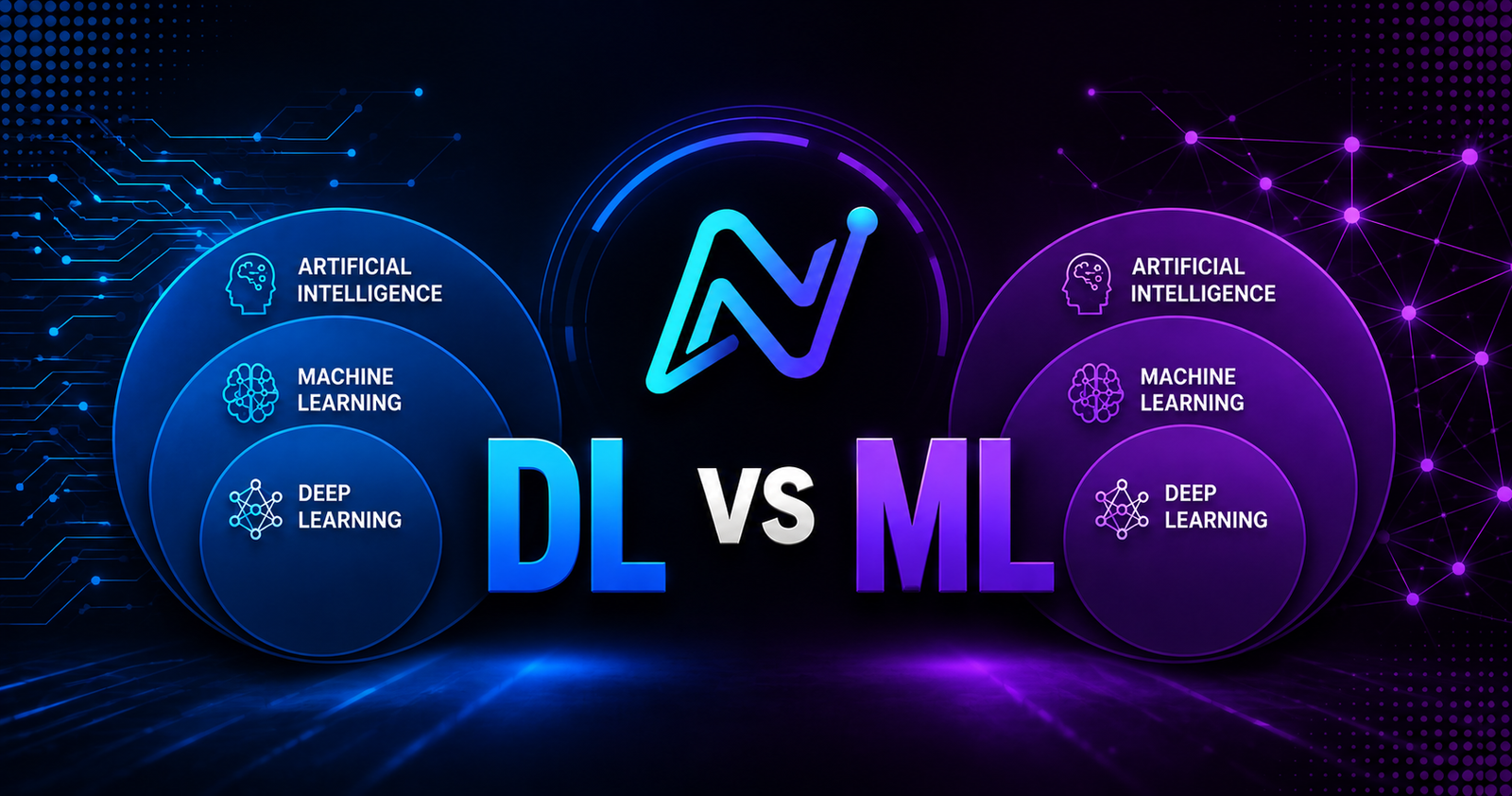
After having a strong base on classic ML, move on to deep learning that is widely used in today’s AI like in chatbots and image recognition.
Understand neural networks and learning capabilities. Build a computer vision image classifier and a basic text based sentiment analyzer in either TensorFlow or PyTorch.
Use either TensorFlow or PyTorch to build an image classifier and a simple text-based sentiment analyzer.
From this point you will also be able to specialize your skills in the direction you prefer as there are many fields of application for ML.
For example computer vision in image analyzing or natural language processing on text and many more.
HANDS-ON PROJECTS ARE THE REAL CURRICULUM
Employers, they do not hire people based on Certificates, they hire based on what you can build. Should not ignore projects. We have added a corresponding plan to achieve this step from a certain step level.
The classification projects are suitable for beginners, for example you build a house price predictor based on linear Regression; a spam predictor using a decision tree etc.
In intermediate stages, such as customer segmentation based on K-mean clustering, you build your personal recommendation project, and the weather forecast system, and maybe you can build fake news or sentiment classifiers.
For your portfolio projects, create an end-to-end ML project: it takes raw data, builds a model, and clearly communicates your results. Deploy one of your models so anyone can use it on the live internet.
YOUR WORK GOES ON A PORTFOLIO
Every skill you acquire must be demonstrated to the world. By 2026 your Github and personal blog will take precedence over your resume. Push all of your projects onto Github.
Include clear readme files and brief blog posts on what you built.
Include a one-page document detailing your top project: including, problem statement, your data, what you did, and the outcome. You will also practice and ace interview presentations on these projects.
A 2026 survey researching coding learners’ education found that coding learners who put in the time developing and publicly showcasing a portfolio of projects got interview calls nearly twice as quickly.
A REALISTIC TIMELINE
How long does it take?, is a common question I will try to give an honest answer, according to what most successful self learners indicate around 2026.
Python basic takes 3-6 weeks. Math at a functional level takes 4-8 weeks.
Data tools (NumPy, Pandas, charts) take 3-5 weeks. ML core + first projects take 8-12 weeks.
Deep learning core + portfolio takes 10-14 weeks. All of that takes 9 to 14 months at 10-15h per week.
You can go faster, but if you do you will probably get trapped in the tutorial loop. One thing people ask: how long does all this take?
Here is honest best estimate on what time the majority of people with self-taught coding skills of any respectable quality take (in 2026)
Yes, it is perfectly possible to hack the learning curve, and accelerate at a much faster speed.
If you want to try and power through in no time flat, you’ll catch yourself falling into a tutorial trap: you will forever continue to do nothing but watch endless Passive videos without creation.
COMMON MISTAKES THAT SLOW YOU DOWN
One issue is ‘tutorial hell’ meaning watching course after course but never building. Fix it by actually building something after every single lesson. Skipping math and then finding you don’t understand things is another big mistake. All you need is a bit of math.
Actually implement it, do not skip it. You are probably going to want to skip the math or dive into deep learning too quickly. Running neural networks is easy enough to get started with but without the basics, it is hard to grasp them. Focus on what you need to know.
Build it and then learn what you skipped.
Hoarding courses is also a mistake. One good course that you complete is worth 10 courses that you half-watch. Don’t wait for a perfect portfolio.
Start your portfolio after your first project and do not wait until you feel confident enough to.
How to utilize those tools and resources?
Don’t get hung up on money. This entirely free setup covers everything you will need.
Python is FREE, many beginner tutorials for beginners, free web-based platform for you to actually type the code Jupyter Notebook in to do machine learning with a free Python web browser notebook with very strong GPUs.
What more, Google Colab to do all of these is actually free as well, Scikit-learn, Pandas, NumPy and Matplotlib are all free python libraries.
YouTube has StatQuest, 3Blue1Brown and plenty of full courses.
Kaggle has free datasets you can play around with or you can jump into a beginner competition. Use these and you will create your whole road map for free.
Why you should be consistent and how?
Machine Learning is a long road and many give up in the first 2 months. The trick is to make the habit smaller than the overall goal. Work on it every day rather than working on it in chunks for several hours just once a week.
Set a daily time slot for your work.
For me it is just 30 minutes every morning before anything else. Keep a simple note of your progress. A simple daily to-do list or a short note of what you learned. Find a community.
Reddit communities, Discord servers or local meetups keep you motivated.
Don’t compare your work to others. Don’t compare yourself to the expert who writes perfect ML code but only remember how good it was the previous month. Everyone was a beginner once.
Do this consistently, and results will eventually show. The road map only works when you walk on it. ConclusionThe roadmap for machine learning in 2026 is technically simple but relies heavily on practice.
Learn Python as the basis.
Then the core math that you will need. Then the tools for handling data. Then all the basic algorithms. Then deep learning.
Then you are going to want to tie everything together in projects with a publicly hosted portfolio.
This will take about a year of dedicated work. Not a week and not a month. Put work on a roadmap in this order, build a lot and make sure to get your work out there for people to find.
Just do it and you will be absolutely 100% insured to have an ML career, I hope you find the advice useful If you do have any other question. Let me know below.